In 1613, English poet Sir Thomas Overbury published what would become the enduring phrase “beauty is more than skin deep.” Although the phrase reflects the importance of inner character, it also supports the notion that nutricosmetics can enhance beauty from within. A modern take on “beauty from within” is skin cycling, a popular TikTok trend that involves combining supplements and topical products as a part of a holistic approach to achieve healthy, radiant skin.
Skin recovery has also been trending on TikTok, marking a shift away from the increasingly popular K-beauty “glass skin” routines involving 10 or more steps. Such extensive skincare routines can lead to irritation and even chemical burns, according to research published in Dermatology Times. As a result, the focus has shifted toward “barrier repair,” “minimalist routines,” and “skin recovery” to help avoid these adverse effects. The skin recovery supplement market has evolved beyond aesthetic enhancement to encompass cellular health, hydration replenishment, and skin tone balance.
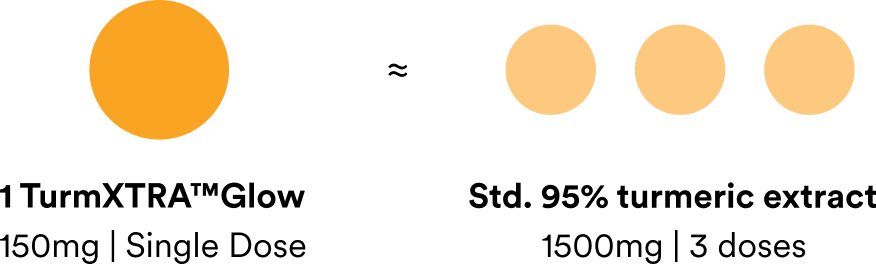
One example is TurmXTRA™ glow, a water-dispersible turmeric extract standardized to contain 60% curcuminoids, designed to deliver efficacy at a dose of just 250 mg. In a recent study involving 96 women, those who were supplemented with TurmXTRA™ glow once daily for two months demonstrated improvement in facial hydration and reductions in trans-epidermal water loss. They also showed reductions in the appearance of blemishes and dark spots, contributing to a more balanced skin tone, along with improvements in skin gloss, compared with the placebo group.
Dietary modifications, stress management and adequate sleep are also key aspects of skin recovery. A recent report from FMCG Gurus, Opportunities for Nutricosmetics: Targeting the Skin Health Market with Food and Drink, highlights growing consumer awareness of the impact of stress and poor sleep on skin health. A large proportion of respondents reported experiencing stress (37% some of the time and 17% most or all the time), fatigue or tiredness (39% and 14% respectively) and poor sleep (37% and 15% respectively). Additionally, 50% of consumers reported actively trying to improve their sleep duration and patterns over the past two years, indicating a strong market opportunity for the nutricosmetics sector. These findings suggest that consumers may be seeking targeted nutricosmetics solutions to support skin health and recovery and reduce the visible signs of stress and fatigue associated with poor sleep.
The authors of Nutricosmetics: Unlocking the “Beauty from Within” Opportunity Across Skincare and Wellness, also from FMCG Gurus, note that growing interest in skin recovery supplements “reflects increasing recognition of the close relationship between skin appearance and mental and emotional wellbeing. Concerns such as dullness, breakouts, and premature aging are increasingly associated with modern lifestyle pressures, driving demand for solutions that support skin recovery and visible improvements.”
Sleep, Stress and Skin
Glowing, dewy skin doesn’t just reflect a healthy diet, it shows that someone sleeps well and manages stress. Conversely, nutrient deficiencies, poor sleep and high stress dulls skin and impacts complexion.
Sleep: Sleep deprivation can disrupt the body’s normal repair processes, many of which occur during sleep, potentially accelerating the visible signs of aging. According to the Sleep Foundation, even one night of poor sleep can result in under-eye darkness, paler than usual skin, and a more pronounced appearance of fine lines.
A study involving 32 women in their 40s investigated how restricted sleep impacts skin health. Participants limited their sleep to four hours for six consecutive nights after which their skin was evaluated. The researchers found that skin hydration reduced significantly after just one day of sleep deprivation, and continued to decline thereafter. Skin gloss, luminosity and elasticity were also affected after a single day of poor sleep, while wrinkles were reported to have significantly worsened.” Notably, elasticity was the parameter most affected by sleep restriction.
Beyond supporting sleep onset and maintenance, clinical evidence suggests Melotime™ sustained-release melatonin also helps improve next-day alertness and well-being. A new 28-day human trial reported improvements in objective sleep parameters, including sleep efficiency, total sleep time, alongside improvements in subjective mood and daytime functioning, as assessed using the WHO-5 wellbeing index. A pharmacokinetic study found that Melotime™ releases approximately 50% of its melatonin within the first hour, followed by gradual release over six hours. This release profile is associated with a substantially longer elimination half-life than that of immediate-release melatonin (5.10 hours versus 1.01 hours for immediate-release), potentially supporting sleep maintenance in addition to sleep onset.
Stress: A substantial body of evidence links stress to changes in skin collagen production. According to researchers, “An important distinguishing characteristic of stress is its duration. An important indicator of the deleterious effects of chronic stress is dysregulation of the circadian cortisol/corticosterone rhythm.”
Stress-induced cortisol dysregulation can destroy a good night’s sleep. Research increasingly reveals that chronic stress may be associated with elevated evening cortisol levels, disrupting the body’s normal sleep-wake cycle. Under typical conditions, cortisol levels peak in the early morning and decline towards the evening, allowing melatonin levels to rise to facilitate sleep preparation. Chronic stress can disrupt this rhythm, potentially contributing to elevated evening cortisol, delayed melatonin release and increased physiological arousal, the classic “tired but wired” pattern.
Ashwanova™, a sustained-release, root-only ashwagandha extract standardized to contain USP withanolides, has shown reductions in cortisol alongside improvements in sleep quality. In the study, participants receiving 150 mg or 300 mg daily experienced reductions in perceived stress as measured by the Perceived Stress Scale (PSS), improvements in sleep quality as assessed by the Perceived Sleep Quality Index (PSQI), and improvements in emotional well-being, measured using the WHO-5 wellbeing index. These findings suggest that Ashwanova™ may offer benefits across multiple aspects of well-being. Such effects are consistent with the potential role of adaptogenic support in addressing stress-related concerns that may also affect sleep and mood.
Conclusion
A fast-paced lifestyle, unmanaged stress and disrupted sleep can adversely affect skin health and appearance. Skin recovery supplements may help address some of these lifestyle-related factors, supporting a holistic approach to beauty-from-within.
Reviewed by Sneha Sawant Desai, PhD