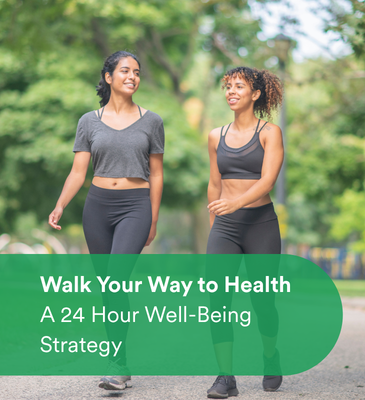

Did you know that you can simply walk your way to better health? Walking every day – either on a treadmill or outdoors – has many benefits to physical and mental well-being.
It all starts with that first step – especially when making the decision to improve health and well-being. According to the US Centers for Disease Control (CDC) National Health Survey 2024, approximately 58.7% of American adults walk for exercise, fun and relaxation.
The link between walking and better health has been well established for decades. And all it takes is just between 5 to 30 minutes a day.
Authors of a 2023 review write, “Meeting current physical activity guidelines by walking briskly for 30 minutes per day for 5 days can reduce the risk of several age-associated diseases. Additionally, low-intensity physical exercise, including walking, exerts anti-aging effects and helps prevent age-related diseases, making it a powerful tool for promoting healthy aging.”
The mental health benefits of walking are also well known. Numerous studies have shown that walking can boost mental energy, cognitive alertness, and focus while significantly reducing fatigue. Peer-reviewed research in neuroscience, psychology, and behavioral medicine suggests that even short walks can produce measurable changes in brain function and subjective vitality.
5 Brain Benefits of Walking
- Immediate Brain Boost: A study using data from the longitudinal IGNITE trial involving 648 cognitively unimpaired older adults found that as little as five minutes of brisk walking can immediately improve processing speed, working memory, and executive function (the brain’s ability to plan, focus, and multitask).
- Surge in Creativity: A Stanford University study revealed that walking increases creative inspiration. Participants were tested while walking and while sedentary. Results showed that walking increased creativity in 81% of participants on Guilford’s Alternate Uses test along with a 23% increase on the Compound Remote Associates test. The authors concluded, “Walking opens up the free flow of ideas, and it is a simple and robust solution to the goals of increasing creativity and increasing physical activity.
- Increased BDNF Levels: According to a systematic review, aerobic exercise including walking triggers the release of Brain-Derived Neurotrophic Factor (BDNF), a protein involved in neuroplasticity, learning and memory. BDN F also plays an important role in supporting hippocampal function and cognitive performance.
- HPA Axis Regulation: Walking has been shown to modulate influence the hypothalamic-pituitary-adrenal (HPA) axis, which plays a central role in regulating controls the body’s stress response. Maintaining a healthy HPA-axis rhythm This is important because cortisol normally follows a daily pattern, with levels generally rising an imbalanced HPA axis is characterized by low amounts of cortisol release in the morning , and declining throughout the high amounts released in the evenings day. Regular physical activity and stress-reducing exercises may help support stabilize this the normal, healthy circadian pattern daily rise and fall of stress hormones. A dysregulated HPA axis is a cause of chronic insomnia and related hyperarousal. Clinical trials show that people with chronic insomnia have elevated secretions of 24-hour adrenocorticotropic hormone and cortisol, particularly in the evening when the levels should be lower to help set the body for sleep. Clinical research demonstrates that walking breaks this cycle, leading to normalized sleep patterns.
- Supports Sleep: One systematic review examining on circadian markers showed found that long-term morning walking can decreases cortisol concentrations right immediately after awakening, smoothing potentially influencing out the body’s daytime hormonal curve rhythm. This correction ensures that when evening arrives, supporting a healthy circadian rhythm, may help facilitate that normal evening decline in the HPA- axis activity, allowing melatonin levels to rise as a part of the body’s natural preparation for sleep. successfully powers down, allowing natural salivary melatonin concentrations to rise uninhibited to induce sleep.
Exercise primarily improves subjective sleep quality, with some of the most consistent benefit being reduced sleep onset latency, as well as improvements in sleep efficiency and sleep continuity, according to another review.
Walking helps normalize the day/night energy-sleep cycle, and there are science-backed supplements that can further improve 24-hour wellness.
Companion Supplements for Walking
When adding a walking regimen for to support overall improved well-being, three complementary supplements can help support some of are shown to help boost the benefits associated with an active lifestyle.
For the day – CaffXtend™: CaffXtend is, a sustained-release non-stimulant caffeine designed for once-daily e-a-day dosing, providing steady energy and focus throughout the day. Studies suggest that CaffXtend can show it supports alertness and cognitive performance while helping to minimize the peaks and troughs often associated with without the typical side effects of conventional caffeine. This makes it, suitable making it ideal for supporting both mental and physical performance. Its flexible formats, from beverages to capsules or and gummies, allow brands to deliver convenient, all-day energy experiences.
For the evening – Ashwanova™: Ashwanova is a sustained-release root-only ashwagandha extract distinguished by its once-daily low-dose clinical efficacy. A new clinical study demonstrated that Ashwanova can help is effective in managing stress symptoms in healthy adults reporting stress. Participants with a Perceived Stress Scale (PSS) score of 14 to 26 were supplemented with 150 mg and or 300 mg Ashwanova for 60 days. ; r Results showed substantial decrease in PSS scores, along with reduced cortisol levels. Participants also reported significant improvements in sleep quality and overall wellbeing, as well as positive changes in stress-related eating behaviors.
For nighttime – Melotime™: Melotime sustained-release melatonin features a unique release profile designed to support healthy sleep throughout the night. The latest human clinical study showed that Melotime, at a dose of just 2 mg nightly for 28 consecutive nights, produced statistically significant improvements in sleep efficiency, total sleep time, sleep onset latency, and wake after sleep onset. These improvements were accompanied by , alongside meaningful improvements benefits in subjective sleep quality and psychological well-being.
For overall support – TurmXTRA™: Engaging in more intense walking or other exercise may create muscle soreness, often not felt until 24 to 48 hours post-exercise. TurmXTRA active (water-dispersible turmeric extract with 60% natural curcuminoids), has been shown to reduce pain intensity after exercise at 12, 24, 48, and 96 hours after eccentric exercise. It also exerted significantly higher improvements in fatigue, mood, sleep quality, generalized muscle soreness, stress, and overall well-being.
Conclusion
Walking, especially outsideoutdoors, diminishes can help reduce stress and rumination, while supporting a more positive and heightens mood. Of course,Over time, regular walking, after time, it can also contribute to cardiovascular and respiratory health and may help support healthy reduce cholesterol levels. As a form of physical activity, walking is accessible and generally places relatively little physical and mental strain on the body, making it an easy habit to incorporate into daily life.
The first step may be the hardest, but it is also the most empowering.
Reviewed by Sneha Sawant Desai, PhD